
Employee Engagement
- We go beyond the basics, and strive to truly engage our employees in our vision, through our values, toward a more sustainable society. @StraussGroup
 You want us to treat employees with respect and fairness. Statistics have shown that when most people think of the responsibility of business, they think first of the responsibility of companies to maintain a stable workplace which provides fair and decent terms and conditions for employees as well as opportunities to develop and grow.
As employees, you want a healthy, safe and inclusive workplace: A workplace driven by responsibility should protect employees from harm by providing a safe working environment which encourages employees to be fit and healthy as well as safe at work. Also, companies should provide equal opportunity for all employees through recruitment from diverse groups within the population and by enabling all individuals to develop. This is what we strive to do in our operations.
Every interaction with our employees is an engagement opportunity: When we talk about being driven by responsibility, in terms of our workplace, we mean going beyond the basics, aiming to truly engage our employees in our mission, through our values, and open communications, toward a more sustainable society. Every interaction we have with our employees, and potential employees, is an engagement opportunity. This means listening, offering feedback and being open to receive feedback and treating every employee with respect.
Engaging with Employees
- Our employees @StraussGroup want to be part of a caring, responsive, nurturing workplace #career
As employees, you want to be part of a caring, responsive, safe, nurturing workplace, which enables you to do your best work, while being inspired to develop professionally and personally. You want to have equal opportunity to engage in meaningful work and receive feedback about your performance. Of course, you want to be treated with respect, you want all your rights upheld, and to be paid fairly and competitively for your contribution.
Internal communications and dialog
Our business culture is based on open and transparent dialog with our employees. We make every effort to keep employees updated on business activities, plans, projects, performance, and results. We understand that informed employees, who have the opportunity to engage in dialog and contribute their perspectives and ideas internally is the basis for our attentiveness and responsiveness to external stakeholders.
The main channels of communication with our employees are as follows:
- Our global “Colors of Strauss” portal: This is a global intranet platform which provides employees with information about Strauss Group, news, performance results and main events, includes relevant policies and employment information, and offers opportunities to share ideas, interact and influence. Thousands of employees from all over the Strauss world connect with Colors of Strauss every day.
- Our Global Opinion Survey: This comprehensive employee survey, covering employee feedback about Strauss as an employer and employee satisfaction is conducted every two years. Our last survey was in 2010, and 87% of employees who responded said that they are proud to work at Strauss. The next employee survey is scheduled for 2013.
- Open Door Policy: All Strauss employees enjoy a direct line to management to share grievances, ideas or discuss any matter of importance.
- A range of diverse meetings and events: In a business such as ours, we conduct thousands of meetings, events and roundtables in different countries, groups, forums and projects. Many of these are communications meetings in which we update employees and hear your views.
- Performance Discussions: Employees around the Strauss Group engage in formal, and informal, performance discussions about their contribution. Overall in 2012, 93% of employees received a formal performance evaluation.
Upholding the law
Being a responsible employer starts with upholding the law and all the international conventions governing human rights and workplace practices. We uphold the laws governing employment in every country we work in. In many cases, we try to do more than the laws require. As participants in the United Nations Global Compact, and law-abiding corporate citizens, we confirm that we do not employ children, nor do we force individuals to work for us in any way. We respect the rights of individuals to collective bargaining and freedom of association. Through our rigorous annual risk management process, we have not identified any part of our operations which are at risk for child labor, forced labor or limitations on freedom of association. Security personnel on our sites are trained in our ethical practices and maintain a respectful approach to individuals, respecting their rights. No complaints or grievances have been filed against Strauss Group anywhere in the world in relation to upholding human rights. 47% of our workforce is made up of members of employee representative associations, and we maintain positive, respectful relations at all times. Our factories enjoyed positive industrial relations in 2012, as in previous years. We strive to eliminate all forms of discrimination and promote a culture of diversity and inclusion.
A great place to work
We want Strauss Group to be one of the best places to work, and an “employer of choice” in all our markets. In Israel, we have maintained our position for eight consecutive years as one of the top ten “the best companies to work for” in the top-100 ranking conducted in Israel by the BDI business information company in conjunction with The Marker newspaper, the most highly rated ranking in Israel, and in Brazil, our company Tres Coracoes was listed in 2012 among the top 100 companies to work for by the Great Place to Work® Institute, for the second consecutive year. In our other markets, where we have smaller teams, we may not have appeared on any lists, but we maintain the same standards.
Our global team
- Our global team numbers 14,000 employees – growth of 27% in employment since 2007 @StraussGroup
We’d like you to get to know a little about the employees who make up the Strauss Group. We have been growing at quite some rate over the years, especially as our global business expands, and this has resulted in a net increase in our global team of 27%, from 11,000 employees in 2007, when we first started reporting on Corporate Responsibility, to the 14,000 employees who are part of the Strauss Group global community today located in 20 countries around the world.
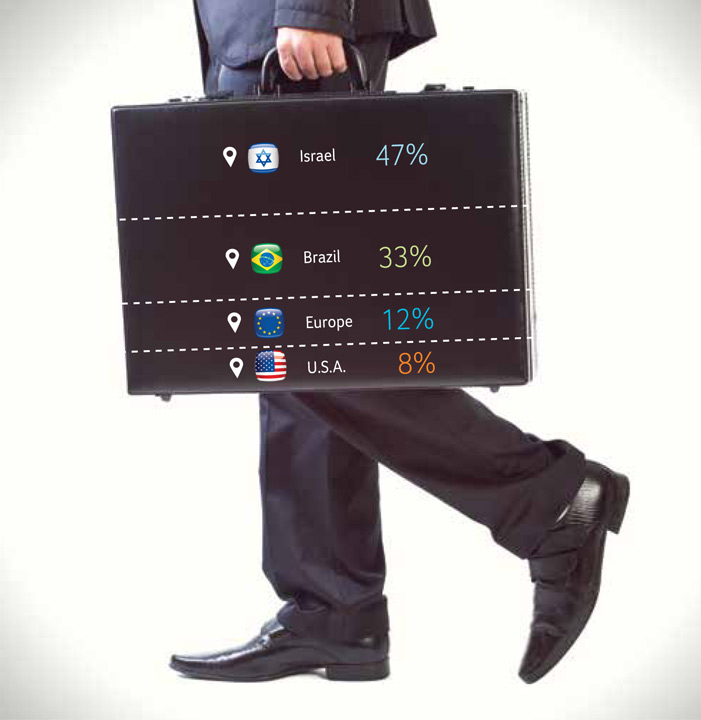
Of this total number of employees, all are employed on permanent, open employment contracts, either personal contracts or Collective Agreements, and 93% are employed on a full-time basis. In some roles, we offer part-time positions to accommodate employee preferences or due to the nature of the work, for example, roles in our Elite Coffee Chain in Israel which are shift-based and enable employee flexibility. Regionally, 71% of part-timers are based in Israel, 28% in the U.S. and just 2% in other countries.
Local is best
- Our global management @StraussGroup understands you, our consumers, wherever you are. 99.9% of managers are locally hired.
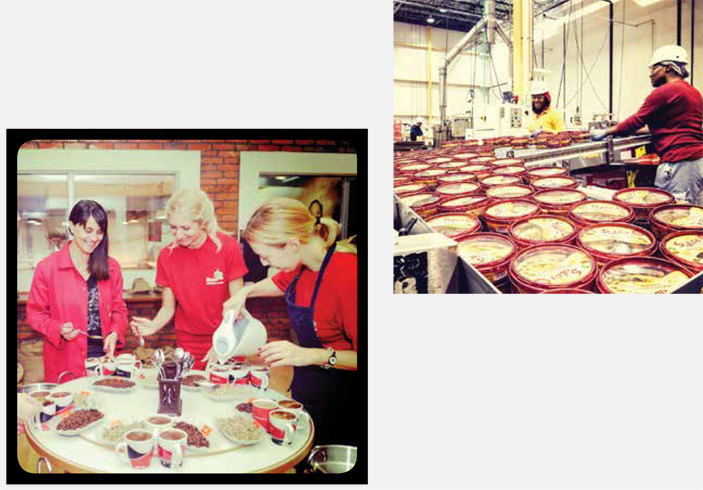
Our policy is to contribute to the economic development of the communities in which we operate through hiring, employing and developing local personnel. In cases where we make acquisitions, we do our best to retain local management and a local workforce. We know they understand local culture and context and you, all our local customers. Around the world, our senior and middle management numbers 1,737 managers. Of these 99.8% are locally hired.
Employee benefits and rewards
- We paid over U.S.$1.5 billion to our employees in salary and to cover the cost of non-salary benefits in 2012 @StraussGroup #employees #compensation
At Strauss, we regard minimum wage as a legal obligation, which we fulfill, but we also strive to go beyond the minimum and provide a compensation package which exceeds legislation while remaining competitive in local markets.
Our reward policy includes base pay, bonuses, a range of non-salary benefits for all employees, as well as stock options for our most senior managers. Taking base pay alone, 11% of our employees receive entry-level minimum wage for unskilled roles, although, when the range of benefits is added to base pay, the overall package is much higher than mandated minimums. In 2012, our total salary and benefits costs amounted to U.S.$ 1.5 billion. In the locations in which we employ the most people, Brazil and Israel, our standard entry wage amounts to 10% and 78 % above legal minimum wage in those countries.
As companies in our group around the world are subject to local norms and in some cases, JV or partnership arrangements, salary benefits are generally determined locally in accordance with local policies and practices. In Israel, for example, employees receive a compensation package which includes health insurance, life insurance, a pension plan, transportation assistance to and from work, subsidized meals and other benefits specific to local markets and competitive with local norms, such as gifts for holidays and special events, clothing allowance, and mobile phone allowance. In Israel, we offer the purchase of our products at reduced cost, and we provide employees with loans at preferred terms. At the end of 2012, the outstanding balance of employee loans was over U.S.$ 2.2 million, which is an indication of how valuable a benefit this is for employees.
Special action to improve employee compensation in Israel
In 2011, there was a significant social protest in Israel which started with consumers objecting to the high price of basic foodstuffs (including cottage cheese, which was targeted as a symbol of unreasonable pricing – we are the second largest supplier of cottage cheese in Israel). Ongoing anti-establishment demonstrations led to a wider movement addressing the broader issues of socio-economic inequalities in Israeli society, the high cost of living and the disproportionate distribution of taxes. You, our consumers in Israel, gave us reason to revisit how we are driven by responsibility in relation to our competitive position in the market, but equally, in relation to our own employees. We felt we had to bring this important dialog in-house, and in late 2011, we formed a new program of employee roundtable dialogs to ensure we listen, learn and act to address your concerns, feedback and recommendations. Following a series of meetings, we developed a new Social Plan to provide additional assistance and support to our employees at the lower salary-range levels in Israel.
Between late 2011 and throughout 2012, we held three roundtable discussions in each of our factories in Israel. Senior management participated in all meetings, and in several cases, our Chairwoman, Ofra Strauss, personally attended. Several employees took the opportunity to discuss personal hardships, as well as provide feedback about the compensation packages they receive and also about the attentiveness of our managers.
The resulting Social Plan was formed, at an investment of over U.S.$ 4 million, to raise the bar for the lower-earning employees in Israel, while maintaining management compensation at 2011 levels. The Social Plan included a one-year freeze on management salaries, a salary increase to lower-earning employees, a preferred rate health insurance plan, and greater accessibility Strauss products at reduced prices. Support was provided for employees with individual hardships through the availability of social workers in Israeli factories who are on-site and can respond, confidentially, to employee requests for assistance, as well as enabling consultations with external organizations that provide assistance such as financial counseling and insurance provisions. In addition, we funded 70 university scholarships for the children of employees, in return for their commitment to ten hours per month of community volunteering.
In addition to these core provisions, we also took steps to reduce inequalities in our employee base by hiring contracted employees. Over the years, we have supplemented our employee teams with temporary personnel employed through third-party manpower providers. While ensuring that all such employees were compensated in line with the law, they often found themselves working alongside Strauss employees who benefited from better employment benefits. In 2012, we hired close to 150 employees onto our permanent payroll.
Supporting alternatives for our merchandisers in Israel
- In 2012, as required by law, 164 merchandiser roles ended in Israel. We supported to the full. 85% secured alternative jobs @StraussGroup or elsewhere.
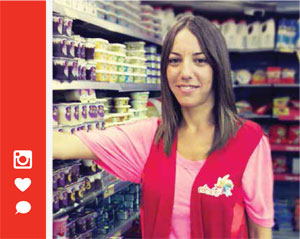
Sometimes the law changes and this has a big impact on you, and on our business. In Israel, the Antitrust Authority had ruled that merchandisers may not be employed by food manufacturing companies as this gives (unfair) competitive advantage to large companies who exploit merchandising opportunities to gain shelf-space at the expense of smaller producers. Merchandisers are our employees who work to stack supermarket shelves and ensure our products are exactly where they should be so that you, the consumer, can make your selection. Typically these roles have been preferred by women who do not have many opportunities in the job market. Also, such roles offer part-time flexibility for working or single moms. In 2012, in order to comply with the law, we needed to terminate the employment of 164 women merchandisers in our Israeli operations who organized our chilled products in supermarkets. We were driven by responsibility to support these employees as they left our operations, and many would need training and support in order to find other roles.
Our goal was to help secure jobs for as many of our departing colleagues as possible, either within the supermarkets in which they already worked, or elsewhere. Our Human Resources team took on specific targets in this area as part of their performance objectives. We deployed all the resources available to us to identify opportunities for merchandisers, assist them in new job search with practical support, such as writing resumes for the first time, job interview training and personal budget management. For those who transferred to work in supermarkets, doing the same role, we supported negotiations with the new employers to ensure they receive continuation of employment rights and benefits. For those who left to take retirement, we created a favorable and equitable retirement package. In 2012, 164 employees ceased their roles as merchandisers of whom 26 (15%) left the company, and others were hired into different roles at Strauss and in supermarket chains.
A Safe Workplace
- You want us to maintain a safe workplace. @StraussGroup we must improve our safety record. #safety
 You want us to maintain a safe workplace. This is a most fundamental aspect of our responsibility to you, our employees. We need to provide a safe working environment, maintain safe procedures, and provide you with enough training, and more, so that you, our employees, will always have safe working as your top priority in anything you undertake. This includes anything you do in our factories, our offices and out on the road.
We must improve our safety record. In Brazil and Israel our accident rates are too high. This is a top priority for us. We record lost workdays from the first day of absence due to injury. Most of the injuries in our factories, which cause lost workdays, are minor, and in some cases, due to local practice, an employee may take a full three days off work, which may make the data look worse than it is in reality. Minor accidents are due to small cuts or trapping fingers in equipment causing bruising, slips on wet floors or bumping into doors or equipment.
| Lost Time Injuries by Region | Number | Rate |
|---|---|---|
| Europe | 8 | 0.54 |
| U.S. | 17 | 1.74 |
| Brazil | 140 | 3.45 |
| Israel | 372 | 6.57 |
| Total | 537 | 4.41 |
| Lost Time Workdays by Region | Number | Rate |
|---|---|---|
| Europe | 43 | 28.86 |
| U.S. | 181 | 18.56 |
| Brazil | 2,880 | 70.95 |
| Israel | 3,629 | 64.14 |
| Total | 6,733 | 55.27 |
Notes: Injuries in Israel exclude road injuries to and from work. Injury and lost time rates are calculate using OSHA methodology per 100 employees. In Brazil, minor road accidents are included as these are required to be registered by law. There were no fatalities in any of our operations.
Safety policy zero accidents.
 We remain committed to providing a safe and healthy work environment and strive to continuously improve our performance with a goal of zero accidents. We employ trained Safety Officers in all our locations, and they maintain an intensive pace of safety training and workshops in all parts of the business. In some locations, such as Israel, Romania and Poland, we have implemented the standard OHSAS 18001, a recognized global safety quality standard. We conduct regular safety audits, identify hazards and take corrective action. We also strive to ensure there are no health risks to employees in our plants, and our safety program includes health-related education and training. At some locations, we employ a physician who provides medical consultations and advice for employees. Attention to safety also includes road safety for our staff involved in sales roles which require significant road travel, as well as instilling a culture of safe driving for those employees who travel to and from work in cars. In cases where we provide company vehicles, these are fitted with the highest standards of safety equipment and accessories.
In all our operations, including Israel and Brazil, we deploy constant efforts to invest in safe working and instill a safe working culture among all employees to improve safety awareness and practice. In Israel and Brazil alone, we invested over 325,000 hours in Safety Training, that’s over 35 hours per employee.
Managers increase accountability for safety in Nazareth (Israel)
In our chocolate factory in Nazareth, the management team decided that reducing the incidence of accidents required the personal leadership and day-to-day involvement of managers. A new program was developed using the ODCA Model (Plan Do Check Act) and was piloted in Nazareth in the last quarter of 2012. So far, the program is a success and is being rolled out in other plants. In five months of operation (October 2012 – February 2013) in Nazareth, 64 safety action items were identified, of which 47% were fully resolved with new procedures, and the remainder continue to be reviewed.
The new safety program is rooted in constant management interaction with employees regarding safety hazards, and includes daily safety tours of the factory floor, on-the-spot checks and discussions of issues identified, creation of an action plan to resolve all issues, and transparent recording of safety results on factory notice boards so that all can see what has been done.
Each morning, two managers from all different functions are assigned to visit every work station and interview the operators, encouraging them to report any potential safety hazard they encounter, and share their thoughts about safe working and potential improvements. Often, it is the operators who suggest the best solutions, and also take the responsibility to ensure implementation for local procedural changes. The managers who identified the issues also carry responsibility to monitor implementation and progress. This program has led to a significant change in culture, awareness and understanding of safe working practices. It empowers both management and employees to take initiative and share accountability.
Leading and succeeding at Strauss
- In 2012, Strauss launched a new Leadership and Core Competency Model #values #vision #execution
Corporate Responsibility is also about developing values-based leadership and ensuring the development of individuals in our organization. This makes us a more sustainable business. In 2012, Strauss launched a new Leadership and Core Competency Model based on the values and culture of our Group, and includes guidelines for positive interactions at all levels, internally and externally, and competencies for developing strategy and executing action plans. In addition, the model defines the competencies required to succeed in the future, and helps us identify what’s needed to acquire these new capabilities.
The process of developing the Leadership and Core Competency Model involved personal interviews with most of our top 50 most senior executives and managers. We realized that, as our group gets bigger, and we expand through acquisitions, these competencies – what it takes to lead and succeed at Strauss – must be expressed in a way that they can be formally taught and passed on to all new people joining the business, as well as serve existing managers in training and development programs, and provide a framework for performance reviews. The new model was launched at our Global Leadership Team conference in November 2012, attended by the top 50 managers in the Strauss Group, and is currently in an early implementation stage and will continue to be embedded during 2013 and beyond.
Investment in training and development of employees
- We invested in almost 50,000 hours of formal leadership and other professional skills and competency-based training in 2012 @StraussGroup
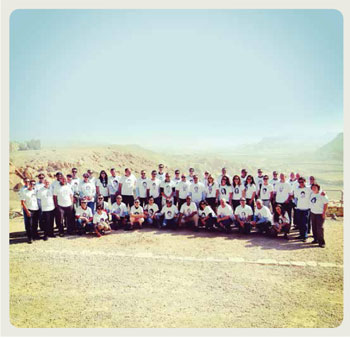 Employees don’t just want a job. They want a future. Professional and personal development is an integral part of improving our business, and in general, we employ individuals who have a thirst for learning and growing. Continued professional development contributes to our ability to deliver operational excellence and innovation to our consumers. Given the dynamic nature of our business, our requirements change as our business changes. Therefore, an investment in professional development contributes to employability: as people learn new skills and competencies, they are less at risk from changes in our business that could affect their long-term employment, as they always have skills which they carry with them into alternative career opportunities. In this way, while we target to maintain a stable and growing workplace, as we have done consistently for over 7 decades, we also provide employees with the skill basis to thrive in times of change.
We provide training and development programs for our employees around the world, targeted to professional needs and personal opportunity, in a way which enables them to do better what they do best. These programs provide training for employees in many different operational and technical roles, marketing and sales skill-building, leadership development programs, and much, much more. Every new employee participates in induction training in which they learn about the company (and our Corporate Responsibility activities) as well as dedicated professional training in order to perform their new role.
In addition to safety training programs, which reached over 325,000 hours in 2012, we invested in almost 50,000 hours of formal leadership and other professional skills and competency-based training in our operations around the world, which reached almost 7,500 employees at different levels in the business, which is an average of 6 hours training per person per year. At management levels, this is closer to 7 hours.
A compelling case for diversity and inclusion
 You want to be included. No matter who you are, where you come from, whatever your background, race, gender, nationality, age, religion, sexual orientation or any other aspects of diversity, you want us to ensure you an equal opportunity in relation to our business. This applies to employees and potential employees and also to those of you with whom we do business, our suppliers, and our partners in the community. We believe that diversity and inclusion are main drivers of successful business operations and create a stimulating environment in which employees can learn and grow both professionally and personally, and which has a broader impact on society as a whole.
- In 2012, we embarked on a global plan to engage all Strauss companies in our diversity efforts. @StraussGroup #diversity #inclusion
In 2012 we embarked on a global plan to engage all Strauss companies in our diversity efforts. Focusing on diversity of individuals, including gender diversity, we work to promote understanding, awareness of the business and personal advantages, and adopt a comprehensive set of practices common to everyone who works in our Group. Each of our five operating companies has prepared plans to advance diversity and inclusion, including training, recruitment and specific performance targets which are tailored to the current status, needs and challenges in each company. Overall, we created a new Diversity Measure for gender balance, reported on a quarterly basis, which links diversity and gender equality performance with senior management compensation.
A task team was established for focused efforts on advancement of women in our management and senior management teams, with the personal involvement of most women and has recommended a multi-year plan with a clear objective for gender diversity to achieve 50% in senior management by 2015.
Specific actions we have undertaken with the support of the Human Resources team in 2012 include:
- Creation of a community of Diversity Managers: In Israel, we created a Diversity Managers Forum to recognize and encourage diversity efforts, develop skills for improved diversity management, encourage new initiatives and share successes.
- Creating dialog and raising awareness: Ensuring diversity and inclusion is on the agenda at management team meetings in all business units, discussing challenges and opportunities and supporting women’s advancement.
- Improving recruitment outreach and processes: Reinforcing our relationships with associations that promote diversity hiring, improving outreach in advertising in diversity-related channels, adapting assessment tools use in hiring processes to ensure inclusion and working with managers to identify positive induction and onboarding processes.
Around the world, in 2012, we recruited 3,670 new employees, of whom 1,511 were women (42% at all levels, including management). An early diversity success in 2012 includes the recruitment of 15 University Graduates from the Arab and Ethiopian communities in Israel.
- Around the world, in 2012, we recruited 3,670 new employees, of whom 1,511 were women (42%) @StraussGroup #gender #women #diversity
Women at Strauss Europe U.S. Brazil Israel Global Women % of total
senior management0 38 50 35 33 Women % of total
middle mamagement39 31 29 43 38 Women % of total
non-management41 46 34 52 44 Total Women % 40 43 33 51 43
- Around the world, we have 33% women in senior management, and 43% women overall @StraussGroup #gender #women #diversity
A diverse approach to recruitment
In all our operations, we make efforts to give opportunities to groups in the population who do not always find meaningful roles in the regular job market. This includes individuals from disadvantaged groups such as those of different ethnic origins, single mothers, employees with physical or mental disabilities, or ex-convicts. For example, in recent years, our chocolate factory in Nazareth, Israel, has operated a program which provides employment for prisoners. Around ten prisoners work at the factory on a full time basis, and receive payment in accordance with employment laws and specific agreements with the Israeli Prison Service. This program provides an important part of prisoner rehabilitation process and enables them to learn a skill and experience life in the workplace, which assist them in adapting to life after completing their sentence and reintegrating into society. We believe that providing constructive and meaningful work for prisoners, we contribute to reducing the future burden on society by providing a basis for them to become positive and productive citizens in the future.